The one-line problem
"What's for dinner?"
For most people that's a mild daily annoyance. If you're one of the 38 million Americans living with diabetes (plus the far larger number who are prediabetic) it's a question with medical stakes, asked every single day, with no good tool to answer it. I know because I'm one of them.
Where it came from
EatNeat started in 2018. I was diagnosed with diabetes in 1996, and by then I was worn down by the weekly grind of finding food that fit. Every week I was hunting down recipes that fit how I now had to eat, not to diet, but to live. The dream was an app that understood that constraint and answered the dinner question for me and for the community I'd found: the Facebook groups where thousands of diabetics trade recipes, wins, and horror stories. That was my research and my lived experience at the same time.
It also had a second origin, and I'll be honest about it: I needed a capstone for a full-stack web development bootcamp, back when I thought I wanted to be a developer, right up until I met JavaScript.
The hardest decision: killing it
Here's the part I'm most sure about in hindsight.
Around 2018, I couldn't build the thing I actually envisioned, and the reasons were specific. Generating meal plans that were genuinely personalized meant machine learning that could reason about someone's constraints, and the models available then couldn't do it. The nutrition data was the other wall: the APIs we needed either didn't exist or were priced for funded companies, not three people bootstrapping a capstone project. I had two choices: ship a compromised version that didn't solve the real problem, or stop.
I stopped. I shelved EatNeat for seven-plus years.
I lead with this because it's the decision I'm proudest of, and it's the one that took the most discipline. Building is easy to talk yourself into. Recognizing that the ground isn't ready (and refusing to ship a version that would've proven the skeptics right) is harder. The idea sat until the world changed around it.
Why it came back
When I was working through a case study years later, I realized the technology had quietly caught up. What was impossible in 2018 was suddenly buildable. I went back to my two original partners, asked for their blessing to revive it, and they gave it. That's why we're here.
The question that defines the product
Someone asked me the sharpest question I've gotten: why is this special, can't anyone just prompt an AI to a similar result?
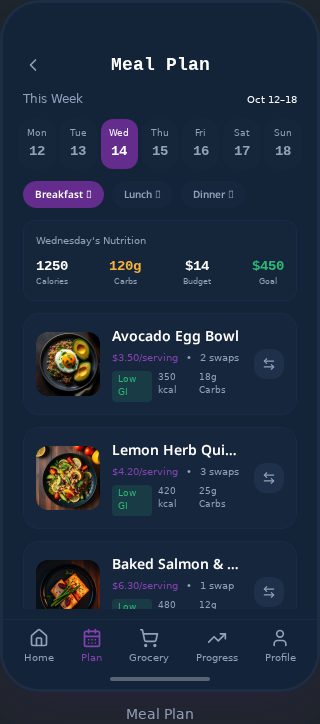
My honest answer is the entire product thesis: nobody has that kind of time. Not the time, not the consistency to remember the right prompt every week, not the patience to refine output into something they can actually shop and cook from. The value isn't generating a meal plan once. It's removing the weekly cognitive load for someone who's already carrying the load of a chronic condition. That gap ( between "technically possible to prompt" and "actually usable every week without effort") is the whole product.
What's actually built
I want to be precise about what exists versus what's imagined.
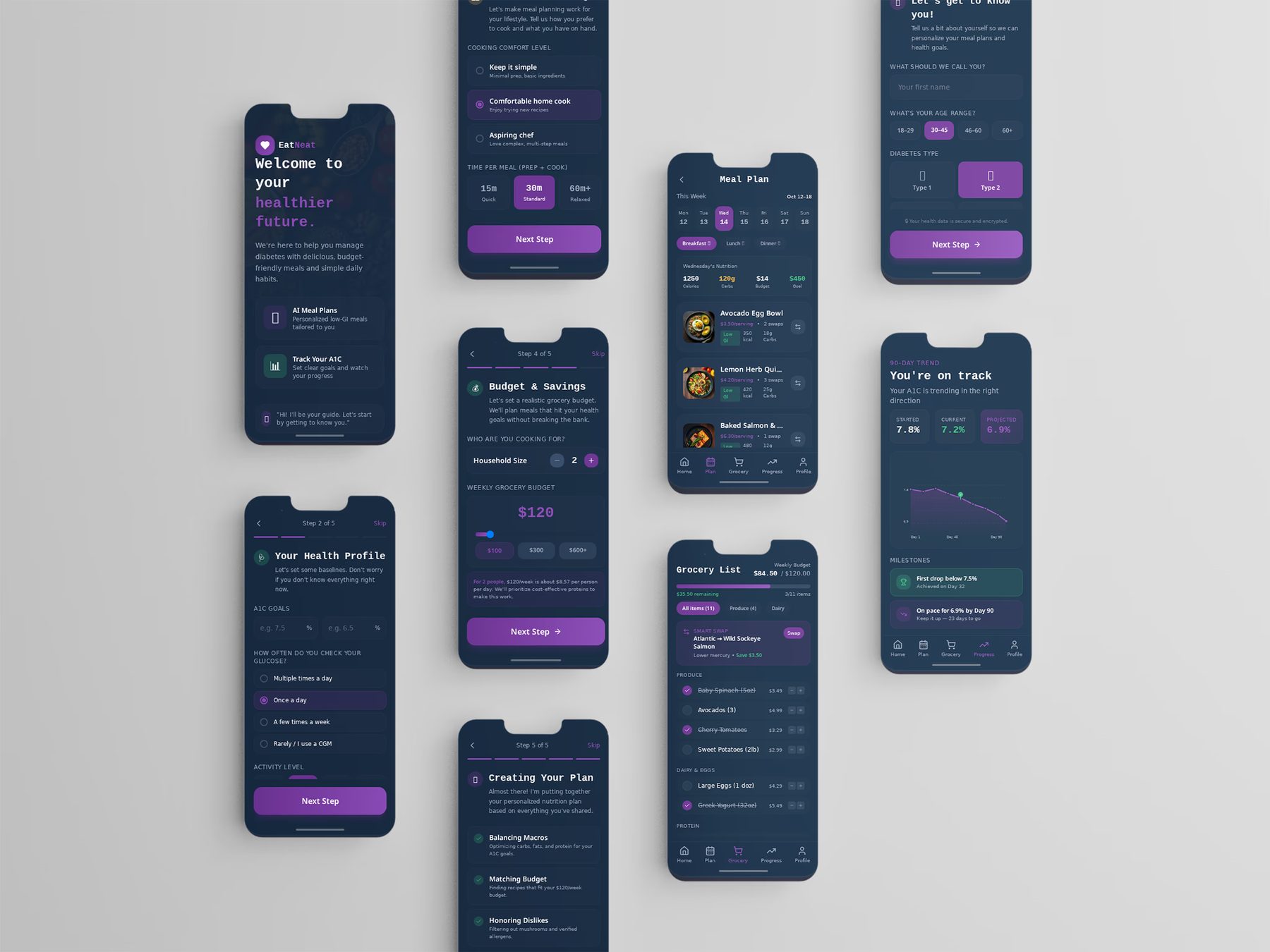
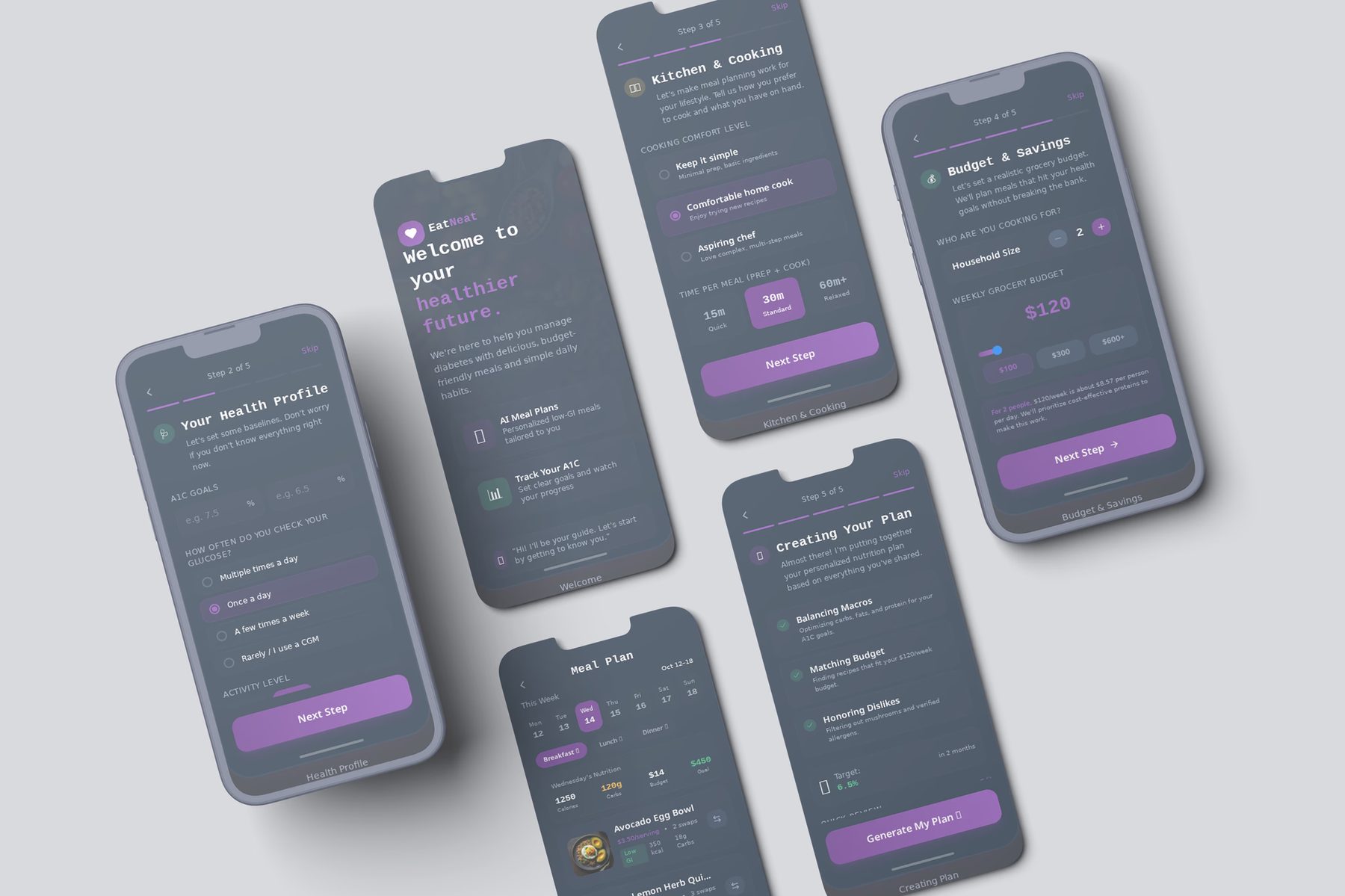
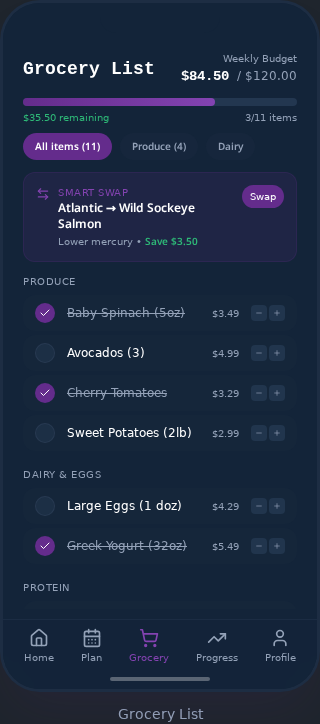
EatNeat is in beta, shipped to about 53 friends and family. Around a dozen have created profiles and generated at least one real meal plan. It's a working product with real users, not a Figma prototype.
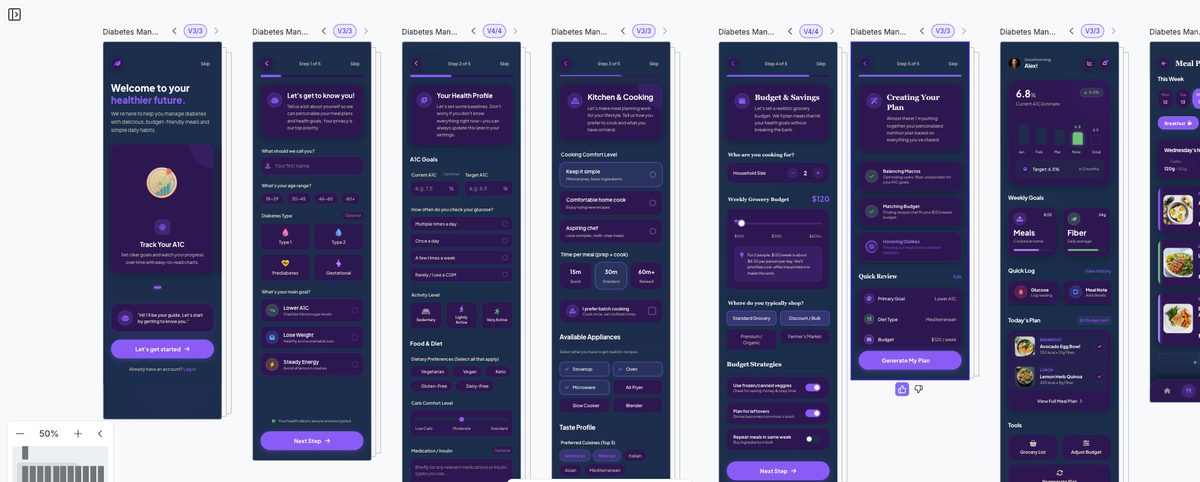
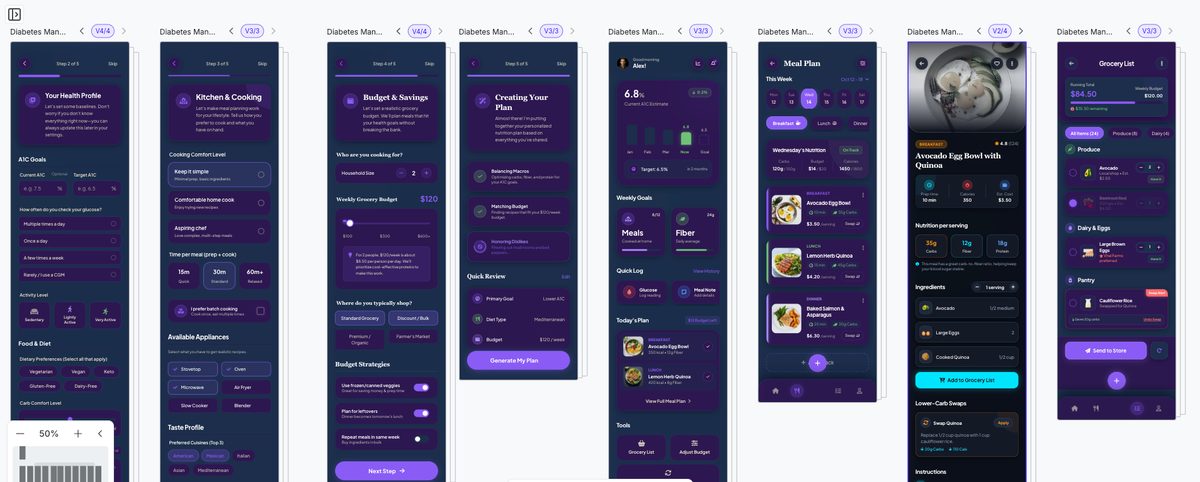
My role spanned the full arc: taking UI and IA foundations through tools like UX Pilot, Base44, and Lovable, then making them mine: reworking the Figma files, setting the overall design direction, and designing the onboarding flow and the questions it asks. Onboarding was where the real design work lived, because getting someone's dietary constraints right is the difference between a plan they trust and one they abandon.
The moment I knew
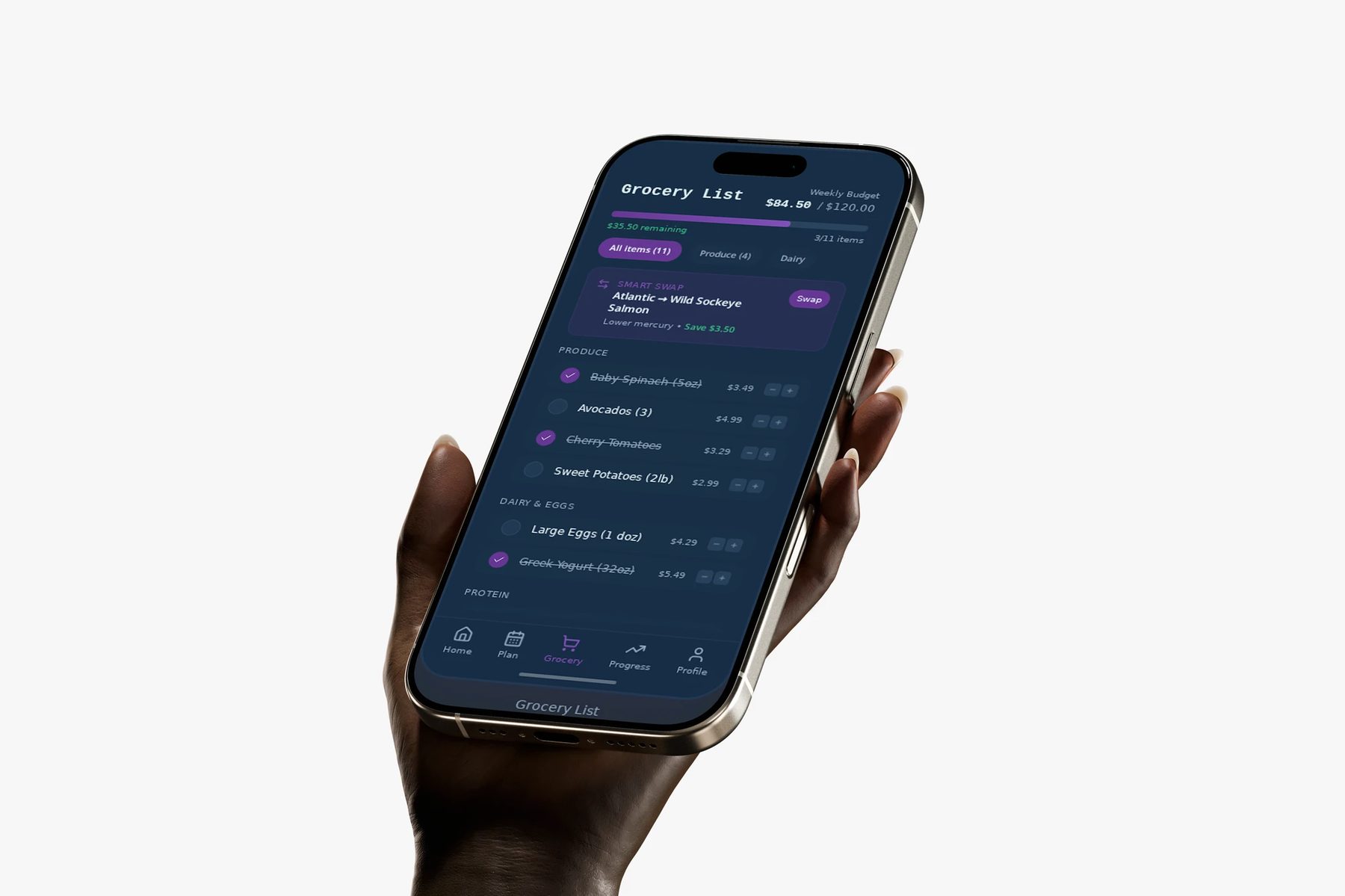
One evening my wife sat down at her computer and, without my help, built a full week's meal plan and the grocery list to go with it. Watching the person I built this for actually use it (unprompted, start to finish) is what pushed me over the edge to finish what I'd started seven years earlier.
What I'm still wrestling with
Two honest tensions.
The first is a quiet doubt: I can't prove any of my theories while the product sits on my computer or in my head. The only way to learn if I'm right is to put it in front of people, which is exactly why it's in beta and not in a folder.
The second is the discipline of not chasing perfection. Every instinct says polish it more before more people see it. But polish isn't what tells me whether this works: real feedback and real updates are. Shipping the imperfect version to 53 people has already taught me more than another year of solo refinement would have.
What surprised me
That I could do this all along. And that shipping (putting the thing in real hands) is far more satisfying than any version of it living safely in my head.